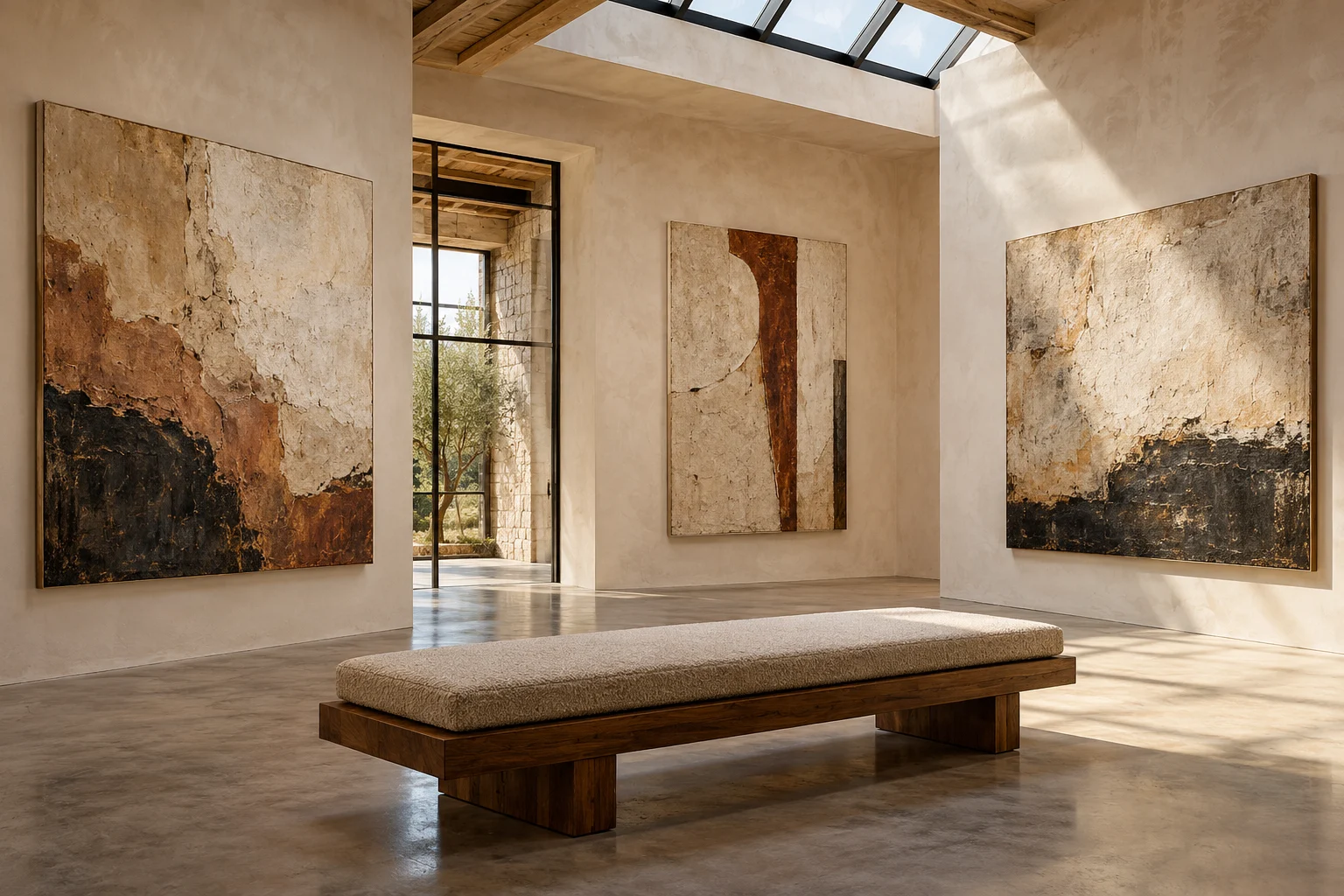
A collection begins as a scattering of interests—a bowl of sea glass, a stack of vintage postcards, or a series of mid-century ceramics. Without a guiding principle, these items often become visual clutter that competes for space in a busy household. For those balancing the demands of a professional career with the rhythms of home life, the challenge is to create a display that offers a sense of order rather than adding to the mental load of managing a household.
Finding the Thread
The most successful collections are not defined by their sheer volume, but by a readable thread. This thread might be a specific color palette, a recurring material, or a particular era. By selecting a personal theme, you transform a group of disparate items into a cohesive visual statement that speaks to your specific tastes. This thematic approach allows you to evaluate new finds against a set standard, preventing the gradual accumulation of items that do not belong.
Documenting the Known
As you assemble these pieces, the act of recording their history becomes as important as the acquisition itself. Every object carries a story, even if that story is brief. When you find a new addition, write down its stated history: where it was found, who owned it previously if known, and any specific details about its origin. This practice turns a shelf of objects into a curated archive rather than a mere pile of possessions.
For example, if you are collecting antique brass instruments, you might record that a particular trumpet was purchased at a specific estate sale in 1994. This documentation provides a sense of continuity and purpose that elevates the items from mere decor to meaningful artifacts. It also creates a centralized record that can be referenced quickly during moments of reorganization.
Embracing the Uncertain
Not every piece will come with a complete pedigree. There will be gaps in the timeline and mysteries regarding the maker or the exact year of production. Rather than feeling pressured to fill these voids with guesswork, treat uncertainty as a formal part of your collection. Mark these details clearly as uncertain in your records. This distinction preserves the integrity of your documentation and allows the mystery to remain part of the object's charm.
Imagine you acquire a hand-thrown stoneware pitcher. You know it is ceramic and features a blue glaze, but the kiln mark is obscured. Instead of deciding it is from a specific decade, record the glaze color and the physical dimensions, then note the origin as 'unknown.' This approach creates a meaningful tradeoff: you sacrifice the illusion of total knowledge in exchange for a collection built on verifiable truth.
Curating Your Space
When integrating these collections into a home shared with family or colleagues, consider how the display interacts with your daily routines. A collection that requires constant dusting or fragile handling may become a source of stress in a high-activity environment. Ask yourself how the placement of these items serves your need for both aesthetic beauty and functional living. If you are unsure how to safely display certain delicate pieces, you might ask a professional conservator about the best environmental conditions for their preservation.
The final decision rests on how much space you are willing to dedicate to the narrative. A collection should enhance your environment, providing a quiet moment of reflection amidst a busy schedule, rather than becoming another task on a mounting to-do list. By choosing a theme, recording what you know, and respecting what you do not, you create a legacy of objects that is both organized and deeply personal.